Why Your Shirt Blank Matters More Than You Think
You can use the exact same vinyl.
The exact same design.
The exact same press settings.
And still end up with two completely different shirts.
Why?
Because the shirt blank matters.
A lot.
This is one of those things that is easy to ignore when you first start making shirts because a blank T-shirt just feels like a blank T-shirt.
It is not.
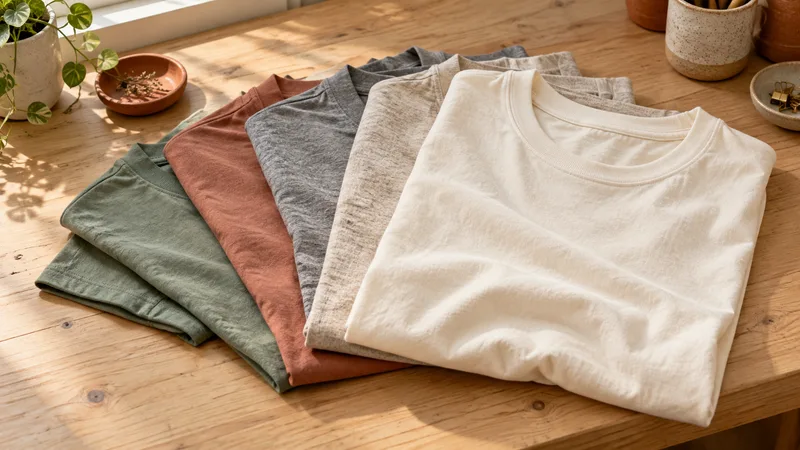
Different shirts have different weights, textures, stretch, fiber blends, fits, and finishes.
And all of that changes how the final shirt feels once you add vinyl.
A Good Design Cannot Fix a Bad Shirt
This is probably the easiest way to explain it.
If the shirt itself is stiff, boxy, scratchy, or uncomfortable, putting a great design on it does not suddenly make it a great shirt.
It is still the same shirt underneath.
That matters because most people judge the entire finished product at once.
They are not thinking:
“The vinyl application is excellent, but the blank is mediocre.”
They are thinking:
“I like this shirt.”
Or:
“I don’t like this shirt.”
The blank is a huge part of that.
Fabric Weight Changes the Feel
T-shirts come in different fabric weights.
Some are heavier and thicker.
Some are lightweight and soft.
Neither one is automatically better.
It depends on what you want.
A heavier shirt can feel more substantial.
It may hold its shape well and feel durable.
But pair a heavy shirt with thick vinyl and a large design, and suddenly you have a pretty substantial amount of material sitting on your body.
A lighter shirt usually feels softer and drapes more naturally.
Pair that with a thin vinyl design with plenty of negative space and you can get a shirt that feels much closer to something you would buy at a retail store.
That difference is huge.
Cotton Is Usually the Easy Starting Point
For everyday heat-transfer vinyl, cotton shirts are usually pretty straightforward.
They generally handle heat well.
The surface is predictable.
Most standard HTV is designed to work well with cotton.
That does not mean every cotton shirt feels the same.
A heavy basic cotton shirt can feel completely different from a soft ringspun cotton shirt.
Same fiber.
Very different experience.
So when somebody says a shirt is “100% cotton,” that really does not tell you everything you need to know about how it will feel.
Ringspun Cotton Usually Feels Softer
This is one of the things worth paying attention to when choosing blanks.
Ringspun cotton is made differently from basic open-end cotton, and the finished fabric generally feels smoother and softer.
You can usually tell when you pick the shirt up.
It feels less rough.
It tends to drape better.
And if you are trying to make a shirt that feels more like something somebody actually wants to wear regularly, that softness matters.
Especially when you pair it with thin vinyl.
The softer the shirt and the softer the decoration, the more natural the finished product feels.
Blends Can Feel Really Good
Cotton-polyester blends are also popular for a reason.
They can feel soft.
They often have a little more drape.
They may shrink less than some cotton shirts.
And depending on the blend, they can feel lighter than a basic cotton tee.
But blends can also behave differently under heat.
That is where you have to pay attention.
Polyester does not always love high temperatures.
Some colors can also be more prone to dye migration, where the shirt color starts affecting the vinyl.
That does not mean you should avoid blends.
It just means you need to know what you are pressing.
Tri-Blends Feel Great, but They Are Different
Tri-blend shirts are usually made from some combination of cotton, polyester, and rayon.
These are often extremely soft.
They are lightweight.
They drape well.
They feel worn-in even when they are new.
For comfort, they can be great.
But because they are lighter and usually have more stretch and movement, you want your decoration to match that feel.
A giant thick vinyl design on a super-soft tri-blend can feel especially awkward.
The shirt wants to move.
The vinyl does not.
That contrast becomes really noticeable.
If I am using a very soft shirt, I want the design to stay as light and flexible as possible.
Stretch Matters
Some shirts stretch more than others.
That becomes important when the design stretches with them.
If you are decorating a fitted shirt, athletic shirt, or anything with a lot of stretch, standard vinyl may not always be the best option.
The fabric stretches.
The vinyl may resist.
That can cause cracking, pulling, or just an uncomfortable feel.
Stretch vinyl exists for exactly this reason.
Again, the blank and the decoration need to work together.
You cannot really choose one without thinking about the other.
Cheap Does Not Always Mean Bad
There are plenty of inexpensive shirt blanks that work perfectly well.
Especially if you are making shirts for an event, a one-time use, or something that does not need to feel premium.
The problem is when price becomes the only thing you look at.
Saving a dollar on the blank does not help much if the finished shirt is uncomfortable enough that nobody wants to wear it.
Sometimes spending a little more on a softer shirt makes the entire finished product feel dramatically better.
That can be a much bigger improvement than changing vinyl brands or buying another tool.
Fit Matters Too
This part gets ignored surprisingly often.
A shirt can feel great and still fit terribly.
Some blanks are long and narrow.
Some are short and wide.
Some have tighter sleeves.
Some have huge sleeves.
Some are more fitted.
Some are extremely boxy.
Two shirts labeled “Large” can fit like they came from completely different planets.
If you are making shirts for yourself, this is easy.
Try them.
If you are making shirts for other people, it is worth learning how your favorite blanks actually fit.
Sizing charts help.
Actual shirts help more.
The Surface Matters
Vinyl needs a good surface to bond to.
Most basic T-shirts are easy.
But textured fabrics can change things.
A very rough fabric may make thin vinyl look slightly different than it does on a smooth shirt.
Ribbed materials are another example.
The surface expands and contracts.
That can affect both adhesion and appearance.
The smoother the shirt, the easier it usually is to get a clean, even-looking vinyl application.
Dark and Light Shirts Can Change the Design
The shirt color is part of the design whether you planned for it or not.
This goes back to negative space.
Black vinyl on a white shirt looks completely different from black vinyl on a dark gray shirt.
White vinyl can look especially strong on dark fabric.
And if the design depends heavily on the shirt showing through, changing shirt colors can completely change the artwork.
That is not necessarily bad.
It just means you should preview the design on the actual shirt color before cutting it.
Something that looks perfect on a white background in your design software may disappear on a light gray shirt.
Wash the Blank Before Testing When It Matters
If you are experimenting with a new shirt blank, sometimes it is worth washing one first.
Especially if you plan to use that shirt regularly.
Some shirts shrink.
Some twist slightly.
Some change texture.
A shirt that feels one way brand new may feel completely different after a wash and dry.
If you are making one shirt for yourself, this may not matter much.
If you are planning to make a bunch of the same shirt, it matters more.
You want to know what the final product actually becomes after somebody starts wearing it.
The Best Blank Is the One People Want to Wear
That is really the whole point.
The design gets attention.
The shirt gets worn.
A great shirt blank does not need to be expensive or fancy.
It just needs to work with what you are making.
It should feel good.
It should fit reasonably well.
It should handle the vinyl you are using.
And it should still feel like a shirt after the design is applied.
That is why I think choosing the blank deserves more thought than it usually gets.
You can obsess over cutting settings, vinyl thickness, weeding tools, and press temperature.
All of that matters.
But if the shirt underneath is uncomfortable, none of it really saves the finished product.
A good design deserves a good shirt.